
AI Inspection
AI-powered X-ray inspection for food
It sees what your metal detector can't.
10+ years in Mexico's Bajío region
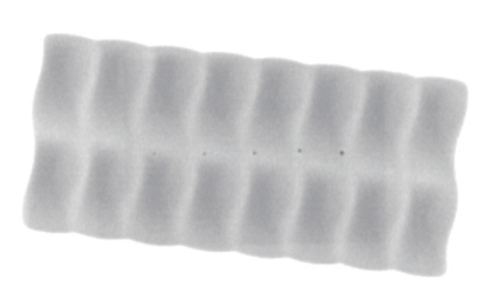
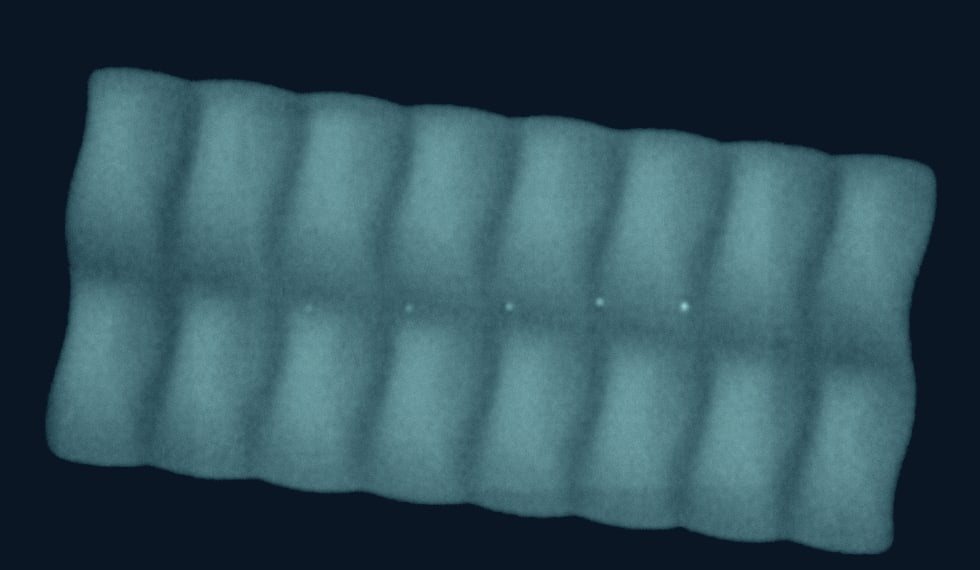
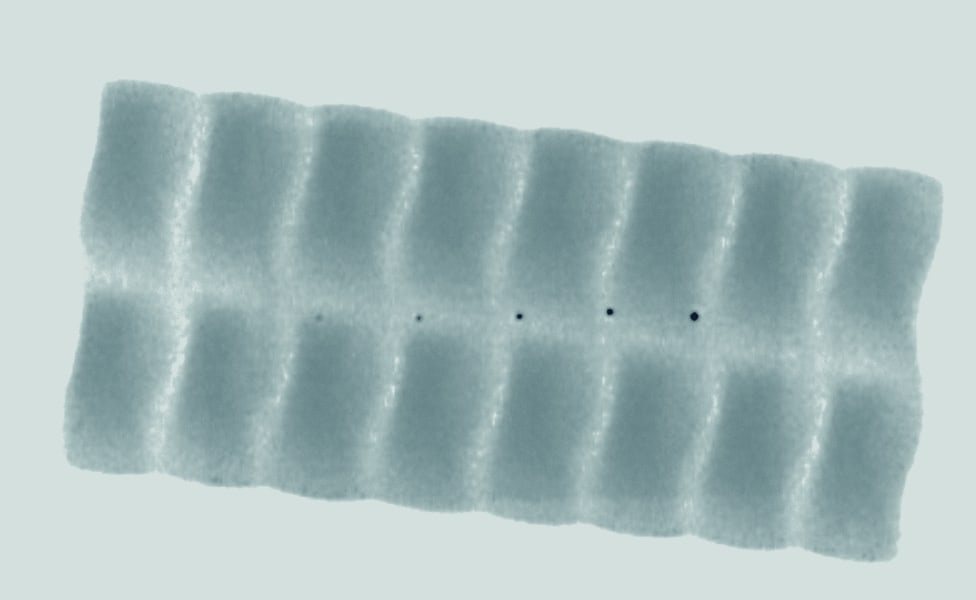 5 metal spheres
What each system sees
Low-energy X-ray checks every product on your conveyor. AI software flags what your detector misses.
Real image · after the algorithm
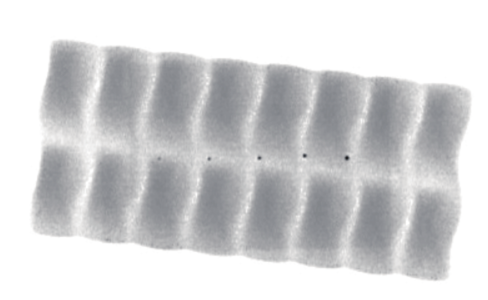 5 metal spheresmarked by the algorithm
Sample image from the manufacturer
| Contaminant | AI-powered X-ray | Metal detector |
|---|---|---|
| Calcified bone | Yes | No |
| Glass | Yes | No |
| Hard plastic and dense rubber | Yes | No |
| Ceramic and stone | Yes | No |
| Ferrous, non-ferrous and stainless metal | Yes | Yes |
Depends on the contaminant's density and size, your product and your line. Confirmed with your samples.
Plants that need this system
If you export to the U.S., you can't risk a recall over a contaminant that isn't metal.
- Meat exporters
Bone fragments in ground meat, sausages and cuts.
- Fruits and vegetables
Stone, glass and plastic in fresh and frozen produce.
- Snacks and bakery
Contaminants in packaged product, before final sealing.
- Exporting plants
Under BRC or FSMA: in-line inspection records for your audits. Technology for exporting plants
The spec sheet, no adjectives
Exactly as the manufacturer publishes it. On your line, it's confirmed with your samples.
- Stainless steel sphere
- Confirmed with your samples
- Glass or ceramic sphere
- 0.8mm
- Inspection tunnel
- 400 mm wide × 160 mm high
See the full spec sheet
- Stainless steel wire
- 0.2 mm diameter × 2 mm long
- Belt speed
- 10 to 60 m/min
- Product type
- Packaged and bulk
- Max. belt load
- 10 kg
- External radiation
- under 1 μSv/h
- Protection
- IP66, SUS 304 stainless steel
- Reject
- Belt stop; optional automatic reject
- Connectivity
- Ethernet and USB; MES integration
- Artificial intelligence
- Detection algorithms tuned to each product
- Integration
- Works with existing lines; no need to restructure production
- Records
- Every inspection, with image and result
Source: manufacturer's spec sheet, model ISD-NFB4016-A3; last three rows from Novitek's published page. On your line, it's confirmed with your samples.
From assessment to operation, without stopping your plant
Before you invest, we run the test with samples of your product.
Assessment call
No commitment: we learn your line, product, volume and certifications.
On-site technical visit
A Novitek engineer and the manufacturer assess the integration point.
Detection tests
We test your products in the lab and confirm feasibility.
Technical and commercial proposal
Specifications and the system's layout on your line.
What food safety managers ask
Does X-ray affect my product?
An inspection system examines the product; it doesn't treat it. The dose per inspection is stated in writing in the proposal. In Mexico, X-ray equipment is regulated by the CNSNS.
What line speed does it handle?
It runs at industrial line speeds. The exact speed depends on your product size and the smallest contaminant you need to find; it's confirmed during the visit to your line and the test with your samples.
Do I need to replace my metal detector?
Not necessarily. X-ray can complement your metal detector or replace it. One option is to keep the detector as the first barrier and place the X-ray before final packaging. Your hazard analysis decides.
Who provides service in Mexico?
Novitek integrates the system and does the technical visit with the manufacturer. Local support and spare parts in Mexico. The equipment brand and response times are stated in writing in the proposal.
Which contaminants does it detect in food?
Dense foreign bodies: metal (ferrous, non-ferrous and stainless), glass, calcified bone, stone, ceramic, high-density plastic and rubber. Whether it sees them depends on their size and their density difference from your product; light plastics may not show up. That's why we test with your samples.
What if my plant already has BRCGS, SQF or HACCP?
Even better. Those schemes require you to control the physical hazards in your risk analysis. If the X-ray system becomes a critical control point in your HACCP plan, the record of every inspection and every reject is evidence for your audit.
What is FSMA 204 and how does it affect me?
It's the FDA traceability rule for foods on its Food Traceability List. It requires lot-level traceability records, with key data at each critical tracking event (receiving, transforming, shipping), delivered to the FDA within 24 hours on request. By mandate of the U.S. Congress, the FDA won't enforce it before July 20, 2028.
FSMA 204 doesn't require inspection images: the X-ray reject log supports your HACCP plan and your audits, but it doesn't replace your traceability records.
Source: FDA, Food Traceability Rule, accessed Oct 24, 2026.
What changes with FSSC 22000 version 7?
Foundation FSSC published version 7 in May 2026. Version 6 audits are allowed until April 30, 2027, and upgrade audits to version 7 run from May 1, 2027 to April 30, 2028. If your audit falls in that window, it's a good time to review your physical hazard controls.
Source: FSSC, “Version 7 Upgrade Process,” May 2026.
What is food safety?
Food safety is the set of practices that keep food from harming the people who eat it: temperature control, hygiene, traceability and physical contaminant detection. X-ray covers that last part: it sees contaminants a metal detector can't (bone, glass, hard plastic, ceramic) and keeps a record of every inspection.

Do you know it ships clean?
Your product leaves the plant today. A bone or glass fragment your metal detector can't see could cost you a lot rejected at the border, or your U.S. customer.